- (022)67437682
- [email protected]
-
B-19, C P Tank, Mumbai - 400004
B-19, C P Tank, Mumbai - 400004


Stainless Steel 316/316L/316Ti Wires are high-performance stainless steel wire products designed for applications that demand excellent corrosion resistance, dependable mechanical strength, dimensional stability, and long service life. The 316 family is alloyed with molybdenum, which improves resistance to pitting and crevice corrosion, particularly in chloride-containing and marine environments. Grade 316L offers a lower carbon composition for improved weldability and reduced risk of sensitization, while 316Ti is stabilized with titanium for enhanced resistance to intergranular corrosion during elevated-temperature service.
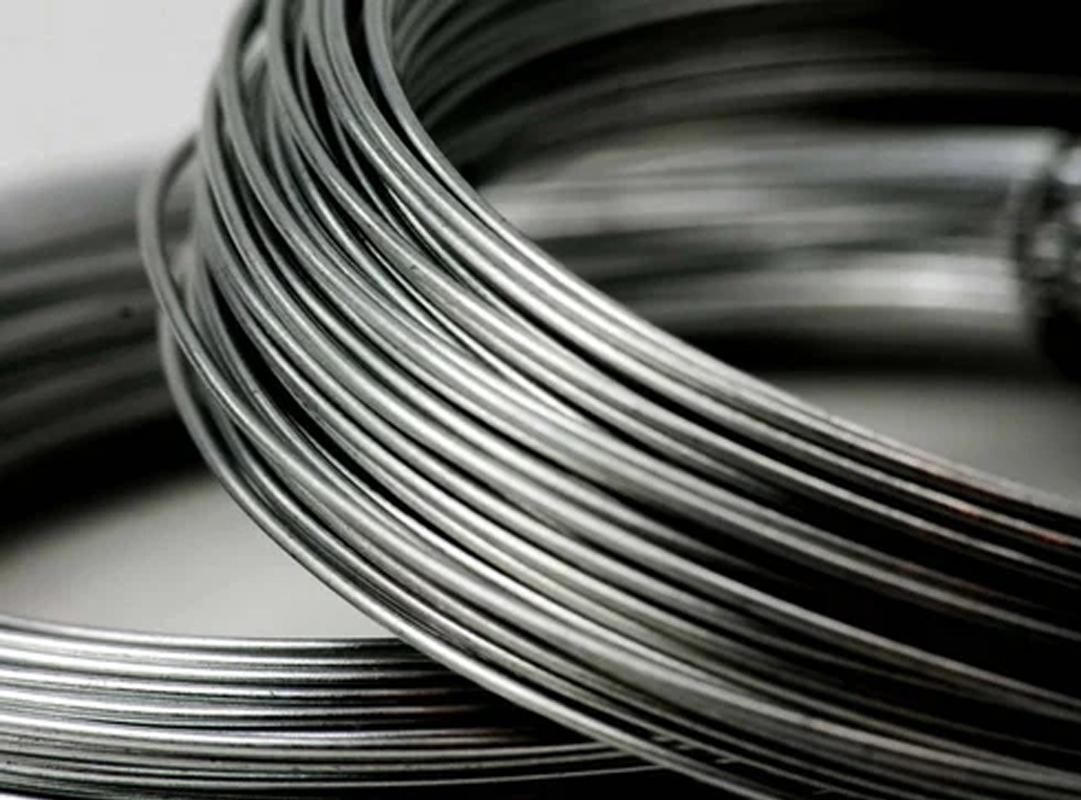
Technolloy Inc supplies Stainless Steel 316/316L/316Ti Wires in different diameters, finishes, tempers, and supply conditions to meet application-specific requirements. These wires can be used for fabrication, forming, fastening, filtration, industrial equipment, chemical processing, food processing, marine systems, and other demanding engineering applications. Selection of the appropriate grade depends on operating temperature, corrosion exposure, fabrication method, strength requirements, and applicable industry standards.
Stainless Steel 316/316L/316Ti Wires are drawn stainless steel products manufactured from austenitic chromium-nickel-molybdenum alloys. Their combination of chromium and nickel provides stainless corrosion resistance, while molybdenum gives the 316 family improved resistance to localized corrosion compared with conventional 304 stainless steel. These characteristics make the wires suitable for environments where moisture, salts, chemicals, or process fluids could cause premature degradation.
Stainless Steel 316 wire is widely selected for general corrosion-resistant applications, 316L is preferred where welding and fabrication are important, and 316Ti is suited to applications involving elevated temperatures and conditions where stabilization against intergranular corrosion is beneficial. Depending on the required end use, the wire can be supplied in bright, annealed, cold drawn, spring, or other specified conditions, with dimensions manufactured according to customer drawings and recognized standards.
Stainless Steel 316/316L/316Ti Wires provide a useful balance of tensile strength, toughness, ductility, and dimensional reliability. Cold drawing can further improve mechanical properties where higher strength is required. This makes the material suitable for components that experience tension, vibration, repeated handling, or mechanical loading while retaining the corrosion-resistant characteristics expected from austenitic stainless steel.
A major advantage of the 316 family is its strong resistance to corrosion in demanding environments. Molybdenum improves resistance to pitting and crevice corrosion caused by chlorides, making these wires suitable for marine, coastal, chemical, pharmaceutical, and process-industry applications. The passive chromium-rich surface also helps protect the wire from atmospheric oxidation and many common corrosive conditions.
These stainless steel wires are engineered for long-term service where reliability and material stability are important. Their resistance to corrosion, oxidation, wear, and environmental exposure can reduce premature replacement and maintenance requirements. 316Ti provides additional benefits in elevated-temperature applications where stabilized material performance is required, while 316L is particularly useful for fabricated and welded assemblies.
Stainless Steel 316/316L/316Ti Wires can be formed, drawn, bent, cut, and fabricated using appropriate industrial processes. The low-carbon chemistry of 316L supports welding and fabrication, while different wire tempers can be selected according to forming and strength requirements. Proper tooling and processing parameters help achieve consistent dimensional accuracy and surface quality during manufacturing.
Although 316-series stainless steel can have a higher initial material cost than lower-alloy stainless grades, its corrosion resistance and service durability can deliver better lifecycle value in demanding applications. Reduced maintenance, longer replacement intervals, and dependable performance can offset the initial investment, particularly where failure or corrosion-related downtime would be expensive.
Stainless Steel 316/316L/316Ti Wires Manufacturers supply wire products for marine hardware, boat fittings, offshore equipment, seawater-exposed assemblies, and coastal infrastructure. The molybdenum content provides enhanced resistance to chloride-related pitting, making the 316 family a practical choice for equipment exposed to saltwater and humid marine atmospheres.
Stainless Steel 316/316L/316Ti Wires Suppliers provide corrosion-resistant wire for chemical processing equipment, wire mesh, filtration components, process assemblies, and fabrication work. The alloy's resistance to many chemicals and process environments helps support reliable operation where conventional materials may experience accelerated corrosion.
Stainless Steel 316/316L/316Ti Wires Stockists serve pharmaceutical, food, beverage, and hygienic processing requirements where corrosion resistance, cleanability, and material integrity are important. The wires can be incorporated into baskets, racks, filters, handling components, and specialized fabricated parts subject to the dimensional and material requirements of the application.
Stainless Steel 316/316L/316Ti Wires Exporters support industrial applications requiring dependable stainless wire for elevated-temperature service, furnace-related components, heat-processing equipment, and specialized fabricated assemblies. 316Ti can be advantageous in suitable high-temperature environments because titanium stabilization helps reduce susceptibility to intergranular corrosion under certain service conditions.
Stainless Steel 316/316L/316Ti Wires are widely used to manufacture woven wire mesh, filter screens, sieves, strainers, and separation components. Their corrosion resistance and ability to maintain structural integrity in wet and chemically exposed environments make them suitable for filtration systems used across industrial processing, water treatment, chemical production, and food processing.
The combination of strength, ductility, and corrosion resistance makes these wires suitable for springs, clips, fasteners, ties, retaining components, and custom-formed parts. Material condition and wire diameter can be selected according to the required spring properties, forming characteristics, load conditions, and final dimensional tolerances.
Stainless Steel 316/316L/316Ti Wires can be manufactured and supplied according to applicable international and customer-specific specifications, including ASTM, ASME, EN, DIN, and other recognized standards where applicable to the product form and grade. Technolloy Inc can support requirements for specified wire diameters, surface finishes, mechanical properties, testing documentation, packaging, and custom quantities according to project requirements.
For international procurement, wire specifications should be confirmed against the required grade designation, dimensional tolerance, surface condition, mechanical properties, certification requirements, and intended service environment. Availability and commercial pricing depend on grade, diameter, finish, quantity, manufacturing condition, testing, packaging, and delivery destination.
| Specifications | ASTM A580 ASME SA580 / ASTM A313 ASME SA313 |
|---|---|
| Dimensions | ASTM, ASME |
| Length | Max 12000 mm |
| Diameter | 5.5 – 400 mm |
| Specialize | Wire, Coil Wire |
| Grade | C | Mn | Si | P | S | Cr | Mo | Ni | Fe |
|---|---|---|---|---|---|---|---|---|---|
| 316 | 0.08 max | 2.0 max | 1.0 max | 0.045 max | 0.030 max | 16.0 - 18.0 | 2.0 - 3.0 | 11.0 - 14.0 | 67.845 min |
| 316L | 0.035 max | 2.0 max | 1.0 max | 0.045 max | 0.030 max | 16.0 - 18.0 | 2.0 - 3.0 | 10.0 - 14.0 | 68.89 min |
| 316TI | 0.08 max | 2.0 max | 0.75 max | 0.045 max | 0.030 max | 16.0 - 18.0 | 2.0 - 3.0 | 10.0 - 14.0 | 68.395 min |
| Grade | Density | Melting Point | Tensile Strength | Yield Strength (0.2%Offset) | Elongation |
|---|---|---|---|---|---|
| 316 | 8.0 g/cm3 | 1400 °C (2550 °F) | Psi – 75000 , MPa – 515 | Psi – 30000 , MPa – 205 | 35 % |
| 316L/ 316TI | 8.0 g/cm3 | 1399 °C (2550 °F) | Psi – 75000 , MPa – 515 | Psi – 30000 , MPa – 205 | 35 % |

316 is a molybdenum-bearing austenitic stainless steel with strong general corrosion resistance. 316L has a lower carbon content, making it particularly suitable for welding and fabricated components. 316Ti is titanium-stabilized and is selected for certain elevated-temperature applications where resistance to intergranular corrosion is important.
Yes. The molybdenum content of the 316 family provides improved resistance to chloride-induced pitting and crevice corrosion, making these wires suitable for many marine and coastal applications. Actual suitability should be confirmed based on the specific seawater exposure and service conditions.
These wires are used across marine, chemical processing, pharmaceutical, food processing, petrochemical, filtration, water treatment, industrial fabrication, and high-temperature engineering applications where corrosion resistance and reliable mechanical performance are required.
Yes. Wire diameter, tolerance, surface finish, temper, coil or straight-length form, packaging, and testing requirements can be specified according to the intended application and customer requirements, subject to manufacturing capabilities and applicable standards.
Pricing depends on the selected grade, wire diameter, quantity, manufacturing condition, surface finish, dimensional tolerances, testing and certification requirements, packaging, and delivery location. A project-specific quotation provides the most accurate commercial price.
 India
 United States
 Saudi Arabia
 Kuwait
 Singapore
 Malaysia
 UAE
 Germany
 Italy
 China
 UK
 Canada
 Iran
 Thailand
 South Korea
 Turkey
 Morocco
 Costa Rica
 Kazakhstan
 Philippines
 Egypt
 Japan
 Russia
 Vietnam
 Australia
 Qatar
 South Africa
 Portugal
 Oman
 Jordan
 Spain
 Hong Kong
 Netherlands
 Indonesia
 Mexico
 Brazil
 France
 Taiwan
 Nigeria
 Bangladesh
 Iraq
 Ukraine
 Poland
 Romania
 Cyprus
 Angola
 Colombia
 Norway
 Chile
 Tobago
 Greece
 Czechia
 Belgium
 Sri Lanka
 Myanmar
 Venezuela
Stainless Steel 316/316L/316Ti Wires Manufacturers, Stainless Steel 316/316L/316Ti Wires Suppliers, Stainless Steel 316/316L/316Ti Wires Stockists, Stainless Steel 316/316L/316Ti Wires Exporters