- (022)67437682
- [email protected]
-
B-19, C P Tank, Mumbai - 400004
B-19, C P Tank, Mumbai - 400004


Reducing Cross is a specialized butt-weld pipe fitting designed to connect four pipelines while accommodating different pipe diameters within a piping system. Unlike an equal cross, a reducing cross has one or more branch outlets with a smaller nominal size than the main connections, allowing engineers to create compact and efficient transitions between differently sized pipelines. The fitting is manufactured with accurately formed outlets and smooth internal passages to support reliable fluid flow, dimensional consistency, and secure welding.

Technolloy Inc supports Reducing Cross requirements for industrial, engineering, fabrication, infrastructure, and machinery applications. Product dimensions, grade selection, length, finish, and tolerances can be customized according to customer drawings, technical specifications, or applicable international standards.
Technolloy Inc supplies reducing crosses for demanding industrial piping applications where strength, dimensional accuracy, pressure resistance, and dependable service are essential. Depending on the project specification, these fittings can be manufactured in stainless steel, carbon steel, alloy steel, nickel alloys, and other engineering materials selected according to operating temperature, pressure, fluid characteristics, and corrosion conditions. The fitting configuration, dimensions, wall thickness, end preparation, and material grade can be produced according to applicable standards and customer requirements.
Reducing Cross fittings provide dependable mechanical strength for piping networks exposed to internal pressure, vibration, thermal cycling, and mechanical loads. Properly selected materials and controlled manufacturing processes help maintain dimensional stability and joint integrity, making these fittings suitable for critical industrial piping systems. Their robust construction also supports reliable operation where pipeline branches need to withstand demanding service conditions.
Material selection plays an important role in the corrosion performance of a reducing cross. Stainless steel and nickel alloy options can offer strong resistance against moisture, chemicals, chlorides, oxidation, and other aggressive service environments. This makes the fitting suitable for applications where corrosion control is essential for maintaining pipeline integrity and minimizing unplanned maintenance.
Reducing Cross fittings are engineered for sustained service in industrial environments. Their durable construction helps withstand pressure fluctuations, temperature changes, repeated operating cycles, and demanding process conditions. When the appropriate material grade and wall thickness are selected, the fitting can contribute to a dependable piping network with a long operational lifespan.
Selected grades of reducing cross materials provide favorable machinability and fabrication characteristics, supporting accurate end preparation, welding, machining, and installation. Precise dimensions help fabricators achieve proper alignment with adjoining pipes and fittings, while consistent manufacturing reduces complications during assembly and helps maintain the intended flow path.
A reducing cross can improve piping design efficiency by connecting different pipe sizes within a single fitting rather than relying on multiple transition components. This can reduce the number of joints, welding operations, installation steps, and associated labor requirements. The combination of efficient design, dependable service life, and reduced maintenance requirements can support lower lifecycle costs.
The combination of material strength, corrosion resistance, dimensional accuracy, and durable construction makes reducing crosses suitable for long-term industrial service. Properly specified fittings can maintain reliable performance across demanding operating conditions while helping piping systems achieve consistent flow management and structural integrity over extended periods.
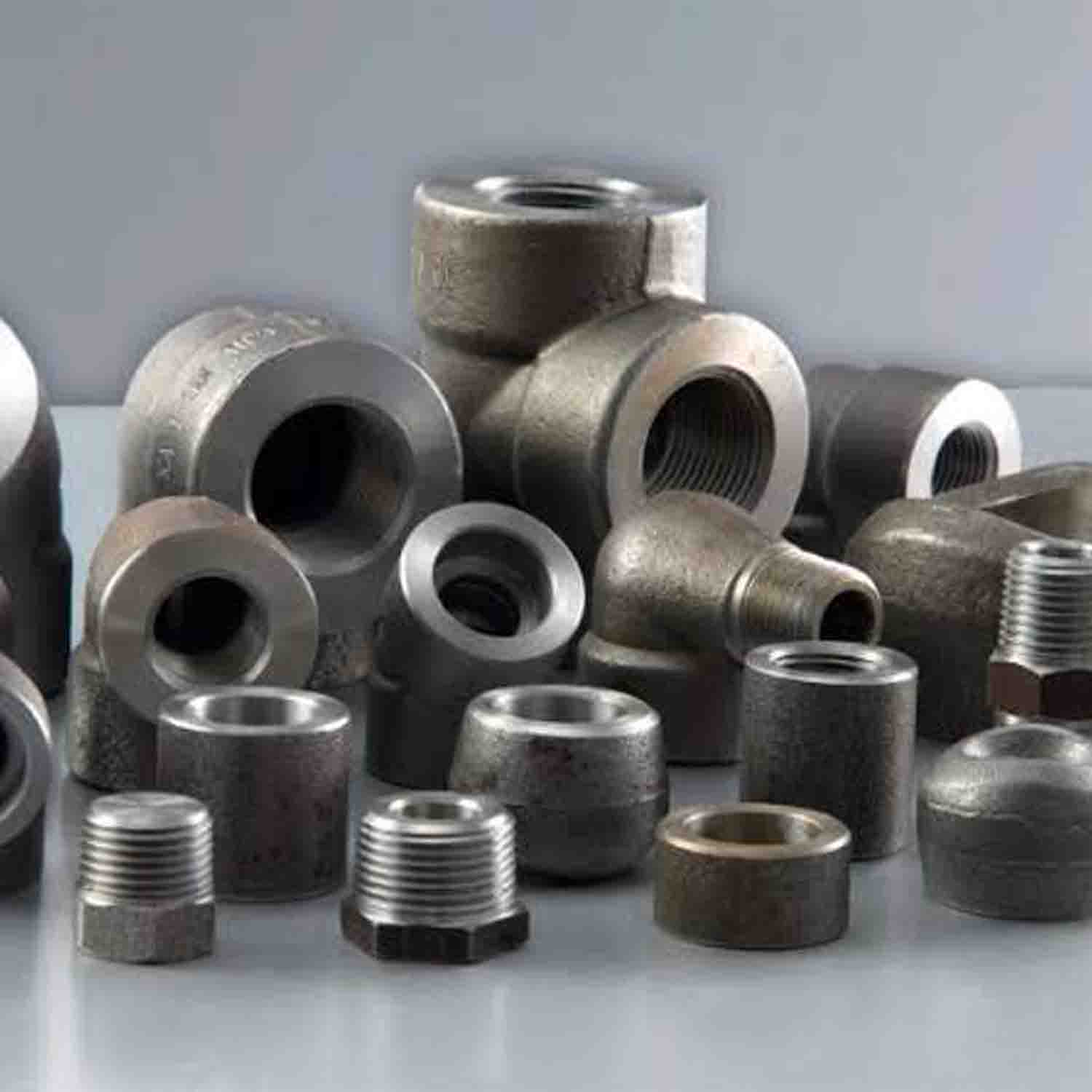
Reducing Cross Manufacturers provide fittings for oil and gas piping arrangements where several pipeline branches must be connected while accommodating different line sizes. These fittings are useful in gathering systems, processing facilities, transfer lines, and related infrastructure where pressure resistance and dependable welded connections are important.
Reducing Cross Suppliers support chemical and petrochemical plants with fittings designed for complex process piping. Reducing crosses can connect branch lines carrying process fluids of varying flow requirements while suitable corrosion-resistant materials help address exposure to aggressive chemicals and elevated operating temperatures.
Reducing Cross Stockists supply piping components for power generation applications, including auxiliary systems, cooling circuits, steam-related services, and process utility lines. Depending on the operating conditions, appropriate alloy and stainless steel grades can provide the strength and temperature resistance required for demanding plant environments.
Reducing Cross Exporters supply fittings for water treatment plants, industrial utility networks, desalination facilities, and process water systems. The fitting configuration enables efficient branch connections between different pipe sizes, while corrosion-resistant grades can provide dependable service in wet and chemically treated environments.
Reducing crosses are also used in hygienic process piping where multiple lines need to be interconnected within compact layouts. Stainless steel construction can provide corrosion resistance and a suitable surface for applications involving water, food-processing fluids, cleaning systems, and other controlled process environments.
In pharmaceutical and specialized process facilities, reducing crosses can support carefully designed piping networks where accurate fabrication, reliable welding, and material compatibility are important. Stainless steel variants are commonly considered for systems requiring corrosion resistance and controlled process conditions.
Technolloy Inc can offer reducing crosses in materials selected for the intended service environment, including stainless steel, carbon steel, alloy steel, and nickel alloy grades. Manufacturing can be carried out according to recognized dimensional and material standards such as ASME B16.9, ASME B16.25, ASTM, and relevant project specifications, subject to the selected material and product configuration. Dimensions, wall thickness, nominal pipe size, end preparation, heat treatment, testing, and inspection requirements can be aligned with the applicable purchase specification.
Technolloy Inc focuses on supplying engineered piping components for industrial buyers requiring dependable material quality, accurate dimensions, and application-specific configurations. Reducing Cross requirements can be evaluated according to service conditions, material grade, pipe schedule, pressure requirements, applicable standards, and delivery expectations. Custom dimensions and documentation requirements can also be accommodated according to the project specification, helping engineers and procurement teams source fittings suitable for their intended piping systems.
Reducing Cross fittings are available in different sizes, material grades, schedules, pressure requirements, and configurations according to customer requirements. Dimensions such as width, height, depth, and weight can be provided as per the selected specification and product size. Availability, packaging, inspection documentation, testing requirements, and delivery schedules can be confirmed based on the order quantity and destination.
| Specifications | ASME B16 9 reducing elbow |
|---|---|
| Reducing 45 degree elbow Pipe Fittings size | Seamless Butt Weld Fittings: 1/2" - 10" Welded Butt Weld Fittings: 1/2" - 48" |
| Reducing pipe elbow Dimensions | ASME/ANSI B16.9, ASME B16.28, MSS-SP-43, BS4504, BS4504, BS1560, BS10 |
| Reducing elbow pipe fittings Thickness | SCH10, SCH20, SCH30, STD SCH40, SCH60, XS, SCH 80, SCH 100, SCH 120, SCH 140, SCH 160, XXS available with NACE MR 01-75 |
| 90 degree long radius reducing elbow Types | Seamless / ERW / Welded / Fabricated Pipe Fittings |
| Weld reducing elbow Type | DN15-DN1200 |
| Connection | Welding |
| Bending Radius | R=1D, 2D, 3D, 5D, 6D, 8D, 10D or Custom Pipe Fittings |
| Size Range | ½" NB to 24" NB in Sch 10s, 40s, 80s, 160s, XXS. (DN6~DN100) |
| Reducing pipe elbow Fittings | Angle : 22.5 deg, 30deg, 45 deg, 90 deg, 180 deg, 1.0D, 1.5D, 2.0D, 2.5D, 3D, 4D, 5D, 6D, 7D-40D. Standard: ASME B16.9, ASME B16.28, ASME B16.25, MSS SP-75 DIN2605 JISB2311 JISB2312 JISB2313, BS, GB, ISO |
| Manufacturing process | Push, Press, Forge, Cast, etc. |
| 90 degree long radius reducing elbow Fittings Test Certificates | EN 10204/3.1B Raw Materials Certificate 100% Radiography Test Report Third Party Inspection Report, etc |
| Origin & Mills | Japanese, Indian, USA, Korean, European, Ukraine, Russian |
| Key markets and industries for reducing elbow |
|
| Application |
|
| Material Test Certificates (MTC) as per EN 10204 3.1 and EN 10204 3.2, Test Certificates certifying NACE MR0103, NACE MR0175 | |
| NPS | Outside Diameter at bevel |
Center to End A |
|
|---|---|---|---|
| Large End |
Small End |
||
| 4 - 3 | 114,3 | 88,9 | 152 |
| 4 - 2.1/2 | 114,3 | 73 | 152 |
| 4 - 2 | 114,3 | 60,3 | 152 |
| 5 - 4 | 141,3 | 114,3 | 190 |
| 5 - 3.1/2 | 141,3 | 101,6 | 190 |
| 5 - 3 | 141,3 | 88,9 | 190 |
| 5 - 2.1/2 | 141,3 | 73 | 190 |
| 6 - 5 | 168,3 | 141,3 | 229 |
| 6 - 4 | 168,3 | 114,3 | 229 |
| 6 - 3.1/2 | 168,3 | 101,6 | 229 |
| 6 - 3 | 168,3 | 88,9 | 229 |
| 8 - 6 | 219,1 | 168,3 | 305 |
| 8 - 5 | 219,1 | 141,3 | 305 |
| 8 - 4 | 219,1 | 114,3 | 305 |
| 10 - 8 | 273 | 219,1 | 381 |
| 10 - 6 | 273 | 168,3 | 381 |
| 10 - 5 | 273 | 141,3 | 381 |
| 12 - 10 | 323,8 | 273 | 457 |
| 12 - 8 | 323,8 | 219,1 | 457 |
| 12 - 6 | 323,8 | 168,3 | 457 |
| 14 - 12 | 355,6 | 323,8 | 533 |
| 14 - 10 | 355,6 | 273 | 533 |
| 14 - 8 | 355,6 | 219,1 | 533 |
| 16 - 14 | 406,4 | 355,6 | 610 |
| 16 - 12 | 406,4 | 323,8 | 610 |
| 16 - 10 | 406,4 | 273 | 610 |
| 18 - 16 | 457 | 406,4 | 686 |
| 18 - 14 | 457 | 355,6 | 686 |
| 18 - 12 | 457 | 323,8 | 686 |
| 18 - 10 | 457 | 273 | 686 |
| 20 - 18 | 508 | 457 | 762 |
| 20 - 16 | 508 | 406,4 | 762 |
| 20 - 14 | 508 | 355,6 | 762 |
| 20 - 12 | 508 | 323,8 | 762 |
| 20 - 10 | 508 | 273 | 762 |
| 24 - 22 | 610 | 559 | 914 |
| 24 - 20 | 610 | 508 | 914 |
| 24 - 18 | 610 | 457 | 914 |
| 24 - 16 | 610 | 406,4 | 914 |
| 24 - 14 | 610 | 355,6 | 914 |
| 24 - 12 | 610 | 323,8 | 914 |

A Reducing Cross is a four-way butt-weld pipe fitting with one or more outlets smaller than the primary connections. It is used to connect multiple pipelines of different sizes within a piping system.
Reducing Cross fittings can be supplied in stainless steel, carbon steel, alloy steel, nickel alloys, and other suitable materials depending on the application, temperature, pressure, corrosion conditions, and customer specification.
Applicable standards may include ASME B16.9, ASME B16.25, ASTM material specifications, and project-specific requirements. The exact standard depends on the material, dimensions, service conditions, and purchasing specification.
They are used in oil and gas, petrochemical, chemical processing, power generation, water treatment, industrial utilities, food processing, pharmaceutical, and other process piping systems requiring multiple branch connections with different pipe sizes.
Yes. Dimensions, material grade, wall thickness, pipe schedule, end preparation, inspection requirements, and other specifications can be supplied according to customer requirements and applicable engineering standards.
 India
 United States
 Saudi Arabia
 Kuwait
 Singapore
 Malaysia
 UAE
 Germany
 Italy
 China
 UK
 Canada
 Iran
 Thailand
 South Korea
 Turkey
 Morocco
 Costa Rica
 Kazakhstan
 Philippines
 Egypt
 Japan
 Russia
 Vietnam
 Australia
 Qatar
 South Africa
 Portugal
 Oman
 Jordan
 Spain
 Hong Kong
 Netherlands
 Indonesia
 Mexico
 Brazil
 France
 Taiwan
 Nigeria
 Bangladesh
 Iraq
 Ukraine
 Poland
 Romania
 Cyprus
 Angola
 Colombia
 Norway
 Chile
 Tobago
 Greece
 Czechia
 Belgium
 Sri Lanka
 Myanmar
 Venezuela
Reducing Cross Manufacturers, Reducing Cross Suppliers, Reducing Cross Stockists, Reducing Cross Exporters